
Copyright your video game. Level up your protection.

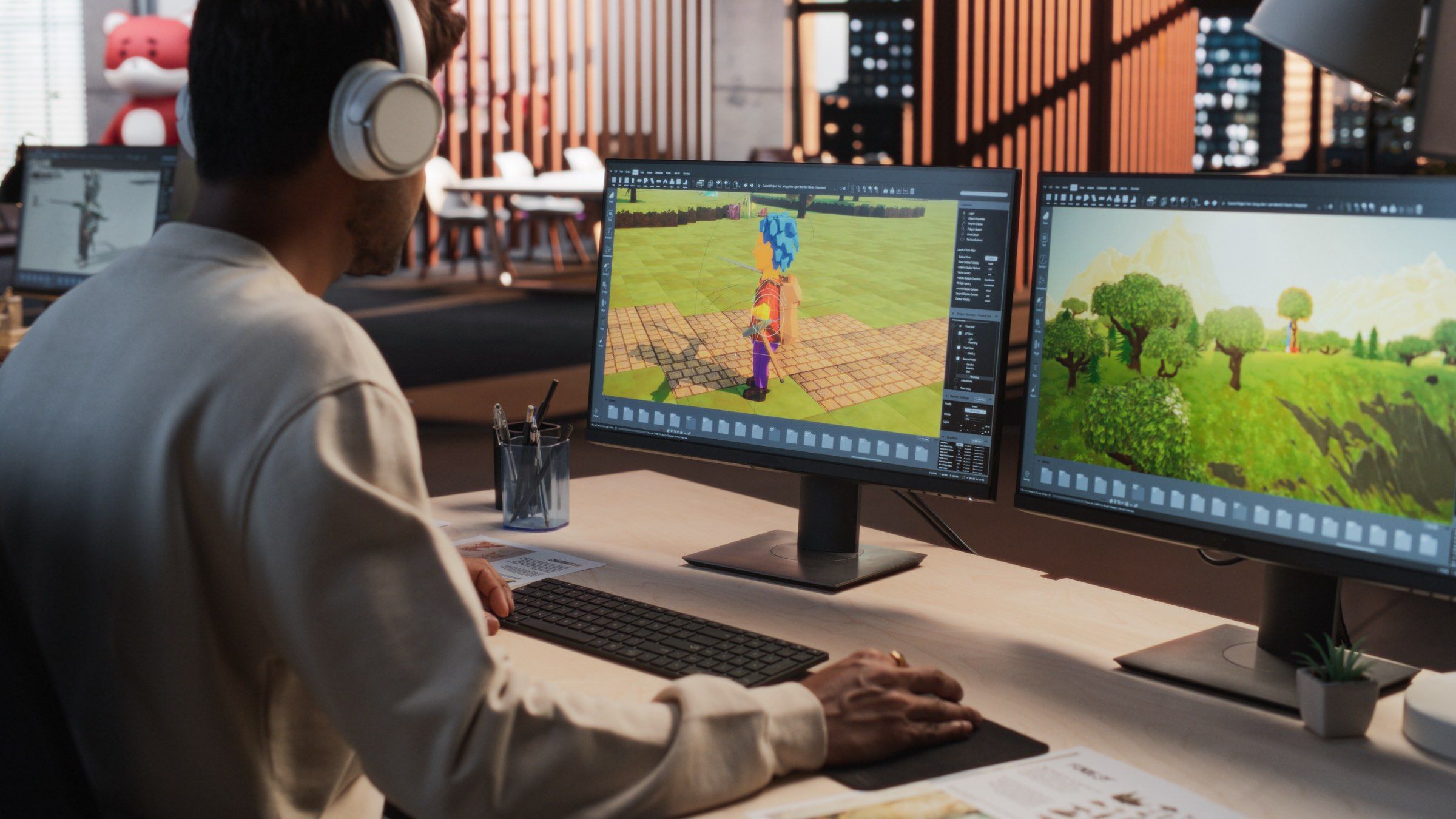
Why register the copyright for your video game
Register before the clone sells
Register before an infringement, or within three months of release, and you can claim statutory damages and attorney's fees. Without that, you must prove the sales a copy took from a $4.99 game.
Indie hits get cloned fast
A pixel-art platformer shows up on a rival storefront with new branding. A registration number gives your takedown request weight, and you need one before you can sue in federal court.
A record publishers and platforms trust
Publishers, platforms and acquirers ask for registration numbers. A public record dates your authorship when a dispute turns on who built the game first.
What video game copyright registration covers
Game code and engine scripts
The program that runs the game, registered as a literary work with trade secrets protected in the deposit.
On-screen audiovisual material
Graphics, animation and gameplay visuals, registered as an audiovisual work, often in the same claim as the code.
Characters and artwork
Original character designs and art assets, protected as part of the game or on their own.
Story, dialogue and quest text
Written narrative and in-game text you authored, covered as creative expression.
Music and sound effects
Audio you own is covered, while a soundtrack released separately or owned by a composer needs its own filing.
Level designs and maps
Original visual and artistic expression in levels, not the rules or mechanics that govern play.
Mobile and indie games
Small releases and solo projects registered the same way as a studio's flagship title.
Expansions, DLC and sequels
A release with substantial new material is a new work, and a new registration keeps protection current.
How to copyright a video game in three steps
Answer a few questions
We prepare your application
We file it and track it
Video game copyright registration: packages and pricing
Secure checkout powered by
Professional application preparation & review -- we help you avoid errors that delay your registration.
Federal e-filing to the U.S. Copyright Office.
Official copyright registration certificate
Everything in Basic.
Cease & desist letter template.
Transfer / assignment template.
One-on-one consultation with a licensed attorney.
Express processing — your application begins by the end of the next business day.
Copyright registration guide for video game developers
How long does it take to copyright a video game?
About 10 minutes with us
Answer plain-English questions about your game: what it is, who made the code, art and music, when the build was finished and whether it has been released. Have the files and screenshots handy.
Filed within one business day
We review your answers, choose the right application and deposit for the code and visuals, and e-file with the U.S. Copyright Office. Deluxe orders start by the next business day.
3 to 5 months at the Copyright Office
Clean online claims currently average 3.4 months, and claims with examiner questions 5.3. Your protection dates from the day the Office receives the application, not the day the certificate arrives.
Copyright a video game with the U.S. Copyright Office
The U.S. Copyright Office registers a video game in two parts: the computer program as a Literary Work (the old Form TX) and the on-screen audiovisual material as a Motion Picture or Audiovisual Work (the old Form PA). When one party owns both, and they were published together, a single application can cover both. The registration does not cover game rules, mechanics, genres or the title.
The government fee is $45 for a Single Application or $65 for a Standard Application today, rising to $55 and $85 on January 5, 2027. In return you get a certificate with a registration number, a public record of ownership, the right to sue in federal court and, if you register in time, statutory damages of up to $150,000 per work.
Most studios use Copyright Engine because the application asks legal-term questions, and a wrong answer delays the claim. We file it correctly the first time.
Registration proves the video game is yours
Copyright Monitoring watches for copies of your registered game across the web, and DMCA Takedowns get clones removed from storefronts, hosts and marketplaces when you find them.